About Steven B Halls, MD, FRCPC
Career Summary
Development of Symbolism Research Methodology
Radiology is fundamentally a career of intense, high-velocity pattern recognition. To accurately interpret cross-sectional medical imaging like CT scans, MRI, ultrasound, and X-rays, a radiologist must develop exceptional visual processing speeds. With individual cases containing hundreds of slices, a standard clinical day requires scanning well over 1,000 discrete images alongside active diagnostic duties.
Operating consistently at a high-volume clinical pace over a 26-year career inevitably builds an accelerated, visual experience and skill. Upon transitioning to full-time symbol research in June 2019, applying this diagnostic processing speed to historical symbolism pictograms offered a seamless transition into full-time symbology.
It was immediately clear that reconstructing the original intent of ancient symbols would require years of systematic analysis. Popular modern interpretations had increasingly degraded, and static academic literature often relied on unverified narrative assumptions rather than structural evidence.
The breakthrough in research volume came from a modern, unconventional technical tool: the Pinterest recommendation engine. By systematically creating curated "boards" and collecting specific structural layouts, it became possible to intentionally train the underlying platform algorithm. Once optimized, the system continues to actively discover and show me symbolism from global sources.
Previous generations of prominent symbol researchers—including figures like Manly P. Hall, Rudolf Steiner, or Aleister Crowley—were mechanically limited by the physical pages of books. Today, pairing the rapid visual intake speed of an experienced radiologist with an algorithmic presentation engine like Pinterest, allows for the review of millions of symbolism images. This technological shift has changed the scale of symbol research entirely, transforming it from a literary debate into a high-volume structural science.
Radiologists are also trained in physics. Nuclear medicine involves atomic isotope knowledge, MRI involves proton spin knowledge, CT involves radiation EMF spectrum knowledge. Previous generation symbolism authors lacked that knowledge and therefore had difficulty recognizing the predominant topic of ancient symbolism and energy flow.
Establishing Expertise Through Scale
Over the past seven years, the estimated volume of images viewed reaches nearly one million per year. The physical evidence of this scale is organized into 310 distinct Pinterest boards containing 82,000 specific pinned images.
In medical practice, a radiologist completes five years of post-MD, post-graduate residency training before entering a junior staff position. At that milestone, they are expected to operate as an independent expert, reading and dictating formal diagnostic reports on every scan routed to them daily.
With seven years of full-time, high-volume image analysis dedicated strictly to symbols, that timeline exceeds the baseline training structure required for medical diagnostic specialization. This volume of exposure establishes the expert status required to interpret these layouts, and this work continues.
Methodology Specifics
Sample size is critical. A collection of symbol images must reach a sufficient scale before patterns can be reliably identified.
Symbol layouts frequently include adjacent contextual cues. These "hints" consist of secondary symbols that carry the same meaning as the nearby primary symbol. By analogy, they are like roadside markers labelling "point of interest". Markers or labels placed near a primary symbol can be analogous to signposts with several languages like French and English. Based on observation, these repeating label symbols appear in roughly 10% of a large collection.
Interchangeability is important. Layouts found within pictograms categorize into approximately 10 to 20 recurring structural patterns. Positioning within these layout frameworks permits symbol interchangeability. When different symbols occupy the exact same position within an otherwise stable, repeating pattern, it serves as strong evidence that those symbols share an identical meaning.
Another prominent pattern involves layouts showing opposite polarities on opposing sides of the composition. Identifying a specific symbol on one side indicates a higher probability that the opposite side contains an opposite polarity symbol. While this rule is not absolute, it provides a reliable basis to begin a hypothesis of the symbol meaning.
Another prominent pattern involves horizontal reptition of alternating polarity symbols. That is, an upward then a downward polarity, then the same upward and downward, repeatedly, OR, an inflow then an outflow polarity, then the same inflow and outflow polarity symbols, repeatedly. When you recognize that pattern and know the polarity of one symbol, the opposite polarity is the likely meaning of the other symbol.
These patterns have been verified many hundreds of times, if not thousands, meeting a 95th percentile confidence interval, the definition of proof common in science.
KEYWORD DEFINITIONS:
Polarities,
Pictogram,
Alternating Polarities,
Opposite Polarities,


This halls.md website got hacked in May 2026. All previous pages were deleted by the hacker. Backups exist, but a fresh start was chosen instead.
There are many health websites in the world, but this is now an absolutely unique resource for teaching symbolism.
The previous content had a body mass index calculator, a body surface area calculator, an ideal weight calculator, a breast-cancer risk calculator, and a variety of health related posts. Those are all gone now.
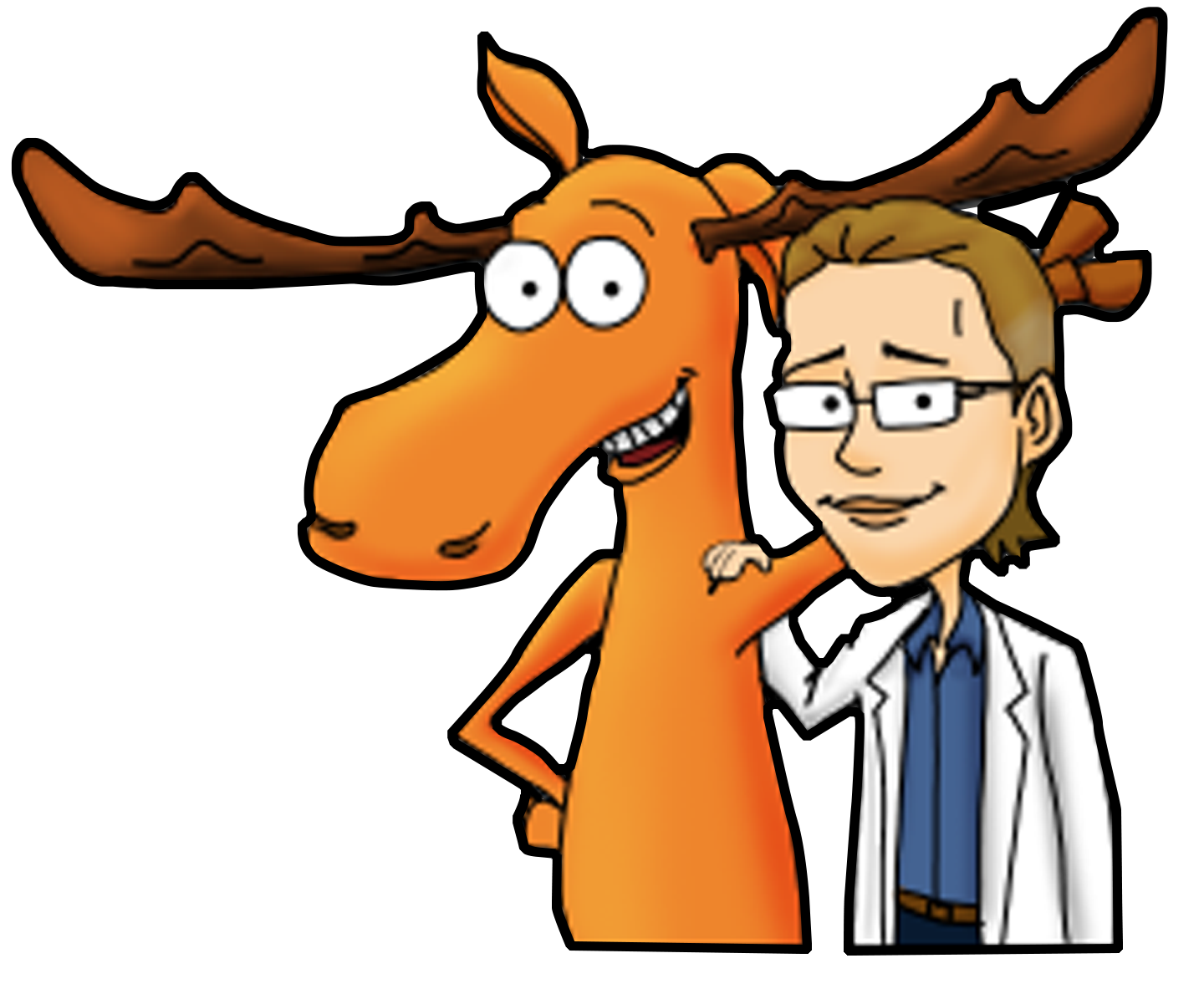
Why a cartoon Moose?
Dr. Halls created a software called Talking Moose, in 1986; the early days of personal computing.
After a heavy career in radiology, during retirement, an updated Talking Moose software was re-created, using hand-crafted code written by Dr. Halls and one collaborating developer.
This occurred prior to the age of AI-generated graphics and coding. It might sound outdated by modern standards, but it is rock solid and has an underlying wisdom for the spoken content it creates.
As a talking notification agent, it improves people's mood and performance, without making spouses jealous of a perfect beautful photo-realistic spokesperson. Coworkers can see, hear and appreciate the Moose as humor.
Having a cartoon Moose on this webpage pays homage to Dr. Halls' history in computing.
The discipline of Torus Symbolism
A sub-specialty within archeology
The definitive framework for the ancient understanding of dimensions, densities of magnetic energy flux, polarities and the complex energy structure of the torus.
These pictograms are decodable and equivalent.
These playful layouts demonstrate how diverse historical pictograms operate on the same fundamental principles.


By exploring the resources curated here, core concepts like "the three," "opposite polarities," "loop-backs," and "horizontal plane flow" will become self-evident.
Beyond simplifying ancient symbolism, this work is backed by a vast, structured archive of supporting evidence.

To explore, study, and corroborate these patterns for yourself, you can access the comprehensive visual databases compiled on my Pinterest boards. While this website doesn't host direct comments, my facebook profile serves as an open space for questions, feedback and ongoing discussion.